Product Spotlight: AMTek Microwaves
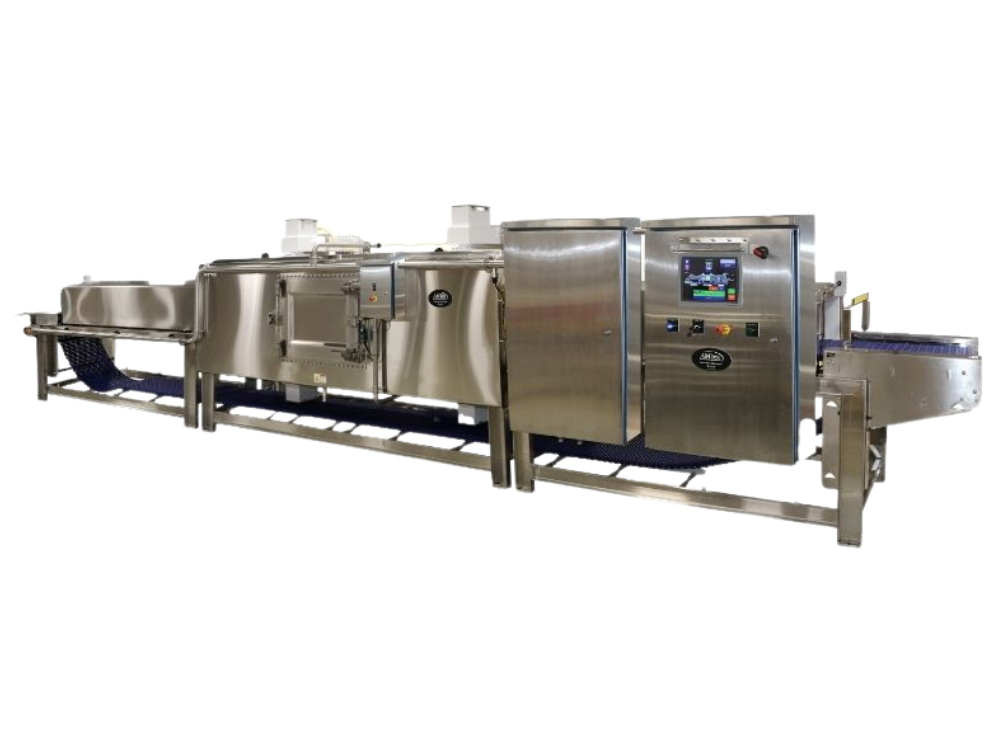
Industrial microwaves are ideal for tempering, cooking and drying a variety of products.

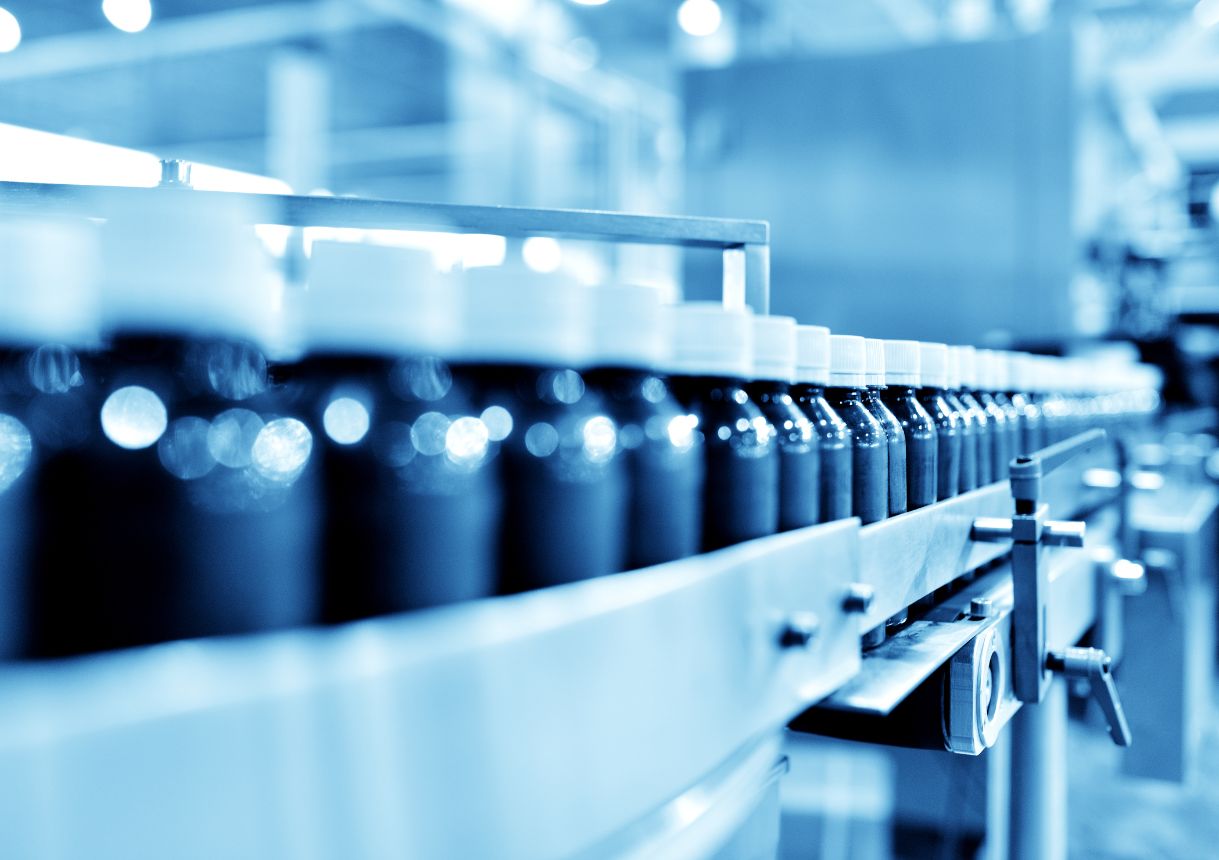
Understanding the pharmaceutical industry production process is crucial for ensuring product quality, compliance and scalability.
In an era where patients demand safe, effective medicines and regulators expect rigorous oversight, the manufacturing process of pharmaceutical products must be carefully controlled from start to finish.
At its core, pharmaceutical manufacturing is a carefully regulated, multi‑stage process — and each step contributes directly to patient safety and operational efficiency.
Today, we will walk you through the key stages of that process, laying the groundwork for deeper dives into filling, labelling, packaging and sustainability.
In simple terms, the manufacturing process of pharmaceutical products can be divided into several core stages. Each plays a pivotal role in turning raw materials into finished medicines ready for distribution.
Here is an overview of the steps:
This initial stage sets the tone: determining active ingredients, excipients, dosage form, stability requirements and regulatory targets. It’s where science meets manufacturing feasibility.
Next, the ingredients are combined in precise proportions, ensuring uniformity of the dosage form. If blending is off, you risk variable potency or quality.
For solid dosage forms (tablets, capsules) granulation builds the correct particle size and flow characteristics, followed by drying to ensure stability and processing performance.
The product is then either compressed or encapsulated into the actual dose. Liquids or semi‑solids may undergo specialised filling.
For tablets, coating adds protection (for example taste masking or, enteric release) and aesthetic finish; for capsules and other forms, finishing may include polishing or secondary operations.
Here you move from dose production into product packaging. Accurate filling, capping, sealing, labelling and final packaging all matter. Good labelling and packaging ensure traceability and compliance with regulations and market requirements. For those looking to explore this stage in more depth, we’ve outlined what a pharmaceutical filling line typically involves and how it integrates with broader manufacturing operations.
Throughout the process and at the end of the line, quality control (QC) tests confirm identity, strength, quality, purity, and packaging integrity. Only once the QC and regulatory release procedures are satisfied can products exit the facility.
By understanding these steps, you can begin to appreciate how each piece of equipment, each process decision and each regulatory checkpoint builds into the full pharmaceutical industry production process.
Now, let’s explore some of those stages in more detail.
Formulation development is the foundation of the pharmaceutical manufacturing process. The initial formulation determines product efficacy and stability, and sets the manufacturing parameters. For instance, whether the product will be a tablet, capsule, liquid or powder dictates almost everything downstream: equipment choice, blending strategy, granulation or direct compression, packaging design and stability protocol.
Blending (or mixing) is where the excipients and API (active pharmaceutical ingredient) are combined. Precision matters here: if the bits aren’t mixed properly, you risk non‑uniform dosage, which is unacceptable in a regulated industry. For example, low API content in a blend can lead to under‑dosed tablets; high API content in spots could cause safety issues.
Modern blending technologies in pharmaceutical manufacturing may include tumble blenders, ribbon mixers, high shear granulators or fluid bed systems. They play a role in ensuring uniformity of dosage, reproducible flow and consistent performance in downstream steps. In the context of the pharmaceutical industry production process, it’s not just mixing — it’s precision mixing in a validated, controlled environment.
The regulatory environment governs not only the formulation itself but the equipment, cleaning validation, change control, and documentation around it.
After formulation and blending, the manufacturing process converts raw materials into the final dosage forms: tablets, capsules, liquids, powders or semi‑solids. The path depends on the form and the required route of administration.
For solid dosage forms: raw powders (APIs and excipients) are granulated (if required), dried, milled/ screened, sometimes coated, compressed or encapsulated. Specialised equipment— tablet presses, capsule fillers, fluid bed dryers, etc — are used. Liquids may require mixing tanks, filtration, sterilisation (if injectable), filling lines. Powders may require special handling for dust control or containment if potent.
Choosing the right equipment and process for each dosage form is critical for stability, regulatory compliance, throughput and cost‑effectiveness. Because every step— from granulation to drying to compression or encapsulation — feeds the next, any inefficiency will ripple downstream.
This stage marks the transition from raw inputs to high-quality outputs, and it demands integration of engineering, process science and quality assurance. Linking into automation and production equipment is crucial here, see our deeper dive in pharmaceutical automation to see how it can help you increase efficiency and reliability.
Packaging and labelling are often seen as the final steps, but they are integral to your production process, ensuring product integrity, traceability and regulatory compliance. A mis‑labelled medicine or defective package may mean product recall, patient risk and regulatory sanction.
Labelling must meet regulatory requirements for batch number, expiry date, dosage, warnings, and sometimes bar‑codes or RFID for track and trace schemes. It also has to integrate with upstream packing lines seamlessly in a high‑speed environment.
Packaging systems (blister packs, bottles, sachets, pouches, etc) must maintain sterility, protect the dose from moisture/ light/ oxygen, provide tamper evidence and support transport and logistics. Equipment in these lines must adhere to pharmaceutical GMP (good manufacturing practice) standards, and must link through inspection, weighing and maybe possibly x‑ray or metal detection as control points.
Understanding how labelling and packaging integrate with processing is key, luckily, we have this guide on labelling pharmaceuticals to help you out.
Some medicines are formulated as powders (for example inhalation, re‑constitution, certain oral dosage forms,) or require specialist handling (such as potent APIs, cytotoxics). In these cases, powder filling, blending, containment and packaging present unique challenges.
Powder handling demands strict dust control, cross‐contamination prevention and precise dosing. Equipment must often be designed to safe handling standards (for example OEB for potent compounds). Filling lines might use vacuum or weighing, and packaging may require special pouch or sachet formats.
See our guide on packaging pharmaceutical powders for more information.
The modern manufacturing environment demands sustainability and operational efficiency. This means optimising energy usage, reducing waste, using recyclable or lighter packaging materials, and employing automation and connectivity (Industry 4.0) to enhance throughput and quality.
A sustainable production line might use machine designs with lower energy consumption, high‑efficiency motors, servo‑driven systems, minimal changeover time, and modular lines that can adapt to product variety. Sustainable packaging materials may incorporate recycled content, reduced film thickness or alternative formats. Traceability systems reduce waste and improve recall readiness.
Understanding the pharmaceutical industry production process is vital for any manufacturer, contract packer or pharma equipment supplier looking to deliver safe, compliant, scalable medicines. From formulation and blending, to packaging and inspection, each stage builds on the last.
By grasping this end‑to‑end process, you set a solid foundation for the subsequent detailed topics in this series—covering filling, labelling, packaging and sustainability.
For manufacturers seeking a trusted partner in this domain, Omori expertise in pharmaceutical packaging, weighing and inspection equipment, and full‑line solutions.
If you’d like to learn how we can support your line—whether it’s filling, labelling or end‑of‑line inspection, get in touch today.
Interested in our packaging solutions, have a question for our team or want to arrange an equipment trial?
Our team is always happy to answer any questions you may have and provide you with the information you need to make the right decision for your business.
Contact us today and one of our experts will get back to you.

Industrial microwaves are ideal for tempering, cooking and drying a variety of products.