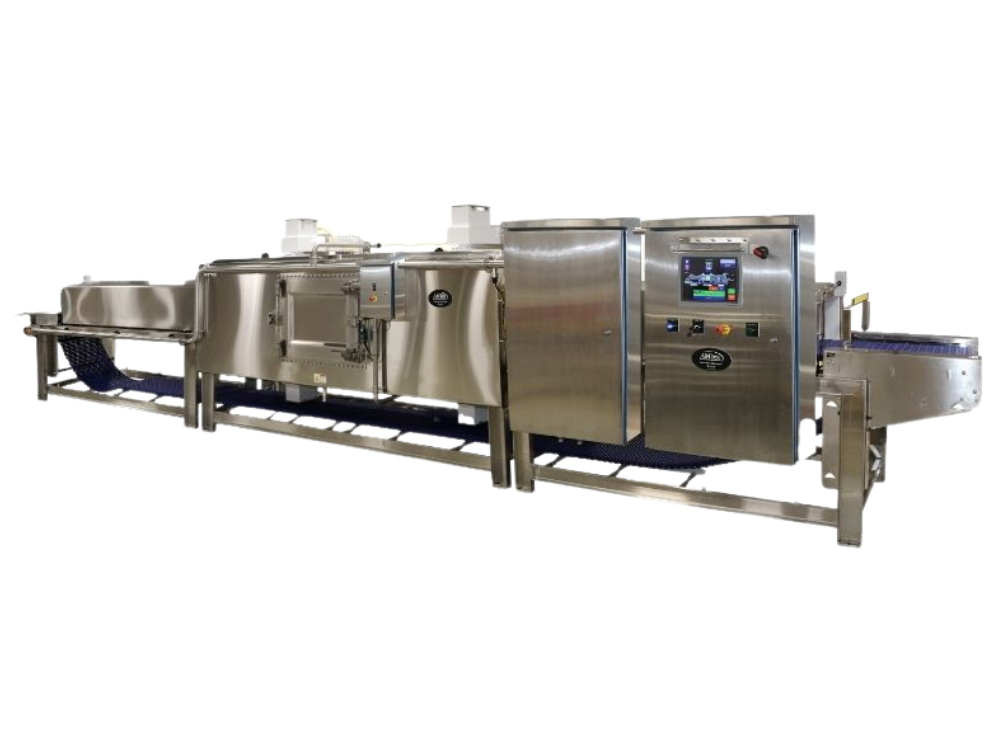
Product Spotlight: AMTek Microwaves
Industrial microwaves are ideal for tempering, cooking and drying a variety of products.


Pharmaceutical manufacturers face a unique dilemma. Their packaging must protect sensitive medicines from degradation, maintain sterility and ensure patient safety—yet the industry faces mounting pressure to reduce its environmental footprint. Unlike fashion or consumer electronics, where sustainability compromises might be acceptable, pharmaceuticals cannot risk product integrity for greener credentials.
This guide explores how manufacturers can make meaningful progress toward environmental goals while maintaining the rigorous standards that pharmaceutical products demand.
Pharmaceutical manufacturers aren’t pursuing sustainability purely from environmental conscience—new regulations, procurement requirements and market pressures are making it a business necessity.
Extended Producer Responsibility (EPR) schemes now place financial responsibility on manufacturers for the end-of-life management of their packaging. Companies must either fund collection and recycling infrastructure or pay fees based on the recyclability of materials they use. These schemes are expanding across Europe and the UK, turning packaging choices into direct cost considerations.
Plastic packaging taxes add another financial dimension. The UK’s tax on plastic packaging containing less than 30% recycled content increases the cost of virgin materials, making recycled alternatives more economically attractive where they meet pharmaceutical standards.
Healthcare systems are driving change through procurement decisions. NHS trusts increasingly factor environmental credentials into supplier evaluations.
Corporate ESG reporting brings investor scrutiny to packaging waste. Shareholders want quantifiable targets and demonstrable progress on environmental impact, making sustainable packaging initiatives visible components of corporate strategy rather than optional enhancements. And consumer preference for eco pharmaceutical packaging creates brand differentiation opportunities that manufacturers cannot ignore.
While pharmaceutical packaging regulations focus primarily on safety and quality compliance, environmental regulations are now adding another layer of requirements that manufacturers must navigate alongside traditional pharmaceutical standards.
Pharmaceutical packaging faces constraints that don’t apply to food or consumer goods, making the shift to eco-friendly alternatives more complex.
Barrier properties cannot be compromised in pursuit of sustainability. Moisture-sensitive products require packaging that maintains low water vapour transmission rates throughout their shelf life—often two to three years. Oxygen-sensitive formulations need materials that prevent oxidative degradation. Light-sensitive medicines demand opaque or UV-blocking packaging regardless of whether those materials complicate recycling.
Sterility maintenance for injectable and ophthalmic products requires packaging that can withstand sterilisation processes and maintain aseptic barriers until use. These requirements typically demand specific material combinations that current sustainable alternatives struggle to match.
Tamper evidence and child resistance add mechanical complexity that increases material usage. Child-resistant closures use more plastic than simple caps, and tamper-evident seals add layers that complicate end-of-life processing. These features are non-negotiable where regulations or safety concerns require them.
Every new packaging material must prove its suitability through rigorous testing before pharmaceutical use. Materials must meet pharmacopoeial standards established by the US Pharmacopeia (USP), European Pharmacopoeia (EP) or other regional authorities.
Extractables and leachables testing identifies any substances that might migrate from packaging into the product. Even trace amounts of certain compounds could affect drug stability or patient safety, making this testing essential but time-consuming and expensive. Sustainable materials—particularly bio-based plastics or recycled content—require the same scrutiny as traditional materials, with no shortcuts permitted.
Stability studies must demonstrate that products remain safe and effective when stored in new packaging throughout their intended shelf life. Accelerated studies provide initial data, but real-time studies at intended storage conditions take months or years to complete. The cost and time investment of validating sustainable alternatives represents a significant barrier, slowing adoption even when technical solutions exist.
New materials, thoughtful design choices and smarter manufacturing processes are enabling more sustainable pharmaceutical packaging without compromising protection.
Traditional pharmaceutical packaging often uses multi-layer laminates that combine different polymers or aluminium with plastic. These materials provide excellent barrier properties but resist recycling because their bonded layers cannot be easily separated.
Single-polymer films represent a significant advance. Modern polypropylene and polyethylene films with enhanced barrier properties approach multi-layer performance for many applications. These eco-friendly pharmaceutical packaging materials work well for solid dose medicines and enable straightforward recycling in existing infrastructure. While not suitable for every product, the trade-off requires evaluation: slightly reduced barriers may still meet requirements for products with shorter shelf lives or less demanding storage conditions.
Plant-derived polymers like polylactic acid (PLA) offer packaging made from renewable resources rather than fossil fuels. While often marketed as biodegradable pharmaceutical packaging, PLA’s moisture sensitivity and relatively low heat resistance make it unsuitable for many primary packaging uses. The biodegradability claim also requires specific industrial composting conditions rarely available in healthcare or consumer waste streams. However, bio-based plastics show promise in secondary and tertiary packaging where they don’t contact medicine directly and face less demanding performance requirements.
Post-consumer recycled (PCR) plastics create pathways toward circular economy principles. Secondary packaging presents the clearest opportunity—bottles, jars and cartons that don’t directly contact medicine can incorporate substantial PCR content. Modern sorting and cleaning processes produce recycled plastics suitable for pharmaceutical secondary packaging, with manufacturers successfully using 30-50% recycled content.
Primary packaging faces greater constraints due to regulatory scrutiny of materials contacting medicines. The relationship between primary and secondary packaging becomes particularly important when implementing sustainable materials, requiring hybrid approaches that optimise sustainability where possible while maintaining protection where essential.
Sometimes the most sustainable material is simply less material. Advances in film technology enable thinner materials that maintain equivalent barrier performance. A 20% reduction in film thickness across a high-volume product line translates to substantial material savings without requiring new recycling infrastructure or extensive revalidation.
Right-sizing packaging to products eliminates unnecessary void space and excess material. Blisters sized to actual tablet dimensions rather than standardised oversized cavities use less material and enable more products per shipping carton. Bottles sized appropriately to fill volumes eliminate the plastic and weight of unnecessarily large containers.
Critical evaluation of secondary packaging components often reveals opportunities. Eliminating non-essential components reduces material consumption without affecting product protection or regulatory compliance.
Mono-material construction enables straightforward recycling because sorting facilities don’t need to separate bonded components. A bottle made entirely from one type of plastic processes easily through mechanical recycling, while a bottle with a different polymer label and closure creates contamination in recycling streams.
Separable components allow recycling of recyclable portions when some parts cannot be recycled. Pump dispensers that detach from bottles, labels that release cleanly from containers, and removable foil seals let recyclers process most of the material even when minor components require different handling. Clear labelling for disposal guidance helps patients and healthcare facilities sort packaging appropriately.
Reusable secondary packaging offers opportunities that primary packaging typically cannot. Returnable transport containers that protect products during shipping can be collected, cleaned and reused multiple times before recycling. Standardised carton sizes enable better pallet utilisation, reducing the number of shipments required and associated transport emissions.
How products are packaged significantly impacts environmental footprint.
Format changes between products generate substantial waste as lines purge previous materials and operators adjust equipment. Quick-change tooling systems minimise this waste by reducing the material needed to establish stable operation after changeovers. Recipe-driven control systems reduce setup errors that cause rejected products, meaning fewer startup rejects and less wasted packaging material and product.
Every rejected unit wastes both packaging material and the medicine inside—often more valuable than the packaging itself. In-line quality verification catches problems early through vision inspection systems that verify correct filling, proper seal formation and accurate labelling. Weight checking confirms dose accuracy in real-time. These automated systems maintain higher consistency than manual inspection while operating at production speeds.
When choosing pharmaceutical packaging machinery, manufacturers should prioritise equipment with proven reliability and appropriate process monitoring. The upfront investment in quality equipment pays environmental dividends through reduced waste over the equipment’s operating life.
Servo motors deliver precise motion control while consuming less energy than pneumatic systems. They eliminate the constant air compressor operation that pneumatic systems require, reducing both energy consumption and heat generation in production environments.
Heat management in sealing operations affects energy usage. Modern sealing systems apply heat precisely where needed rather than maintaining continuously hot sealing surfaces. Induction sealing, ultrasonic welding and other targeted approaches reduce energy waste while often improving seal quality.
Equipment that can reduce power draw during short stoppages or transition to low-energy standby modes during longer breaks consumes less energy over time. Smart power management built into packaging control systems delivers meaningful savings across a facility’s equipment base.
Transitioning to more sustainable pharmaceutical packaging requires a structured approach that balances environmental goals with regulatory requirements and commercial realities.
Begin with a comprehensive audit of material usage and waste generation across all products. Quantify the types and volumes of materials used, identify where waste occurs in the packaging process, and establish baseline metrics for tracking improvement.
Focus on secondary and tertiary packaging first to incorporate sustainable alternatives without extensive product testing.
Target high-volume products for maximum impact. Even modest per-unit improvements multiply significantly across millions of units annually. Products near the end of their lifecycle or undergoing reformulation offer lower-risk opportunities since validation work is already planned.
Material suppliers are developing pharmaceutical-grade sustainable options and can provide technical support for validation work. Packaging machinery that accommodates diverse material types provides flexibility for sustainability initiatives without major capital expenditure.
Stability testing with new materials must demonstrate that products maintain quality throughout their shelf life. Extractables and leachables studies for materials contacting products cannot be avoided. Understanding the regulatory implications of proposed changes prevents surprises and helps prioritise initiatives with more favourable approval processes.
Sustainable pharmaceutical packaging represents both a challenge and an opportunity for manufacturers. While regulatory requirements and product protection remain paramount, material innovations, process improvements and thoughtful design are enabling meaningful progress toward environmental goals.
The path forward requires balancing multiple priorities—safety, compliance, cost and sustainability—but manufacturers who start now will be better positioned as regulations tighten and stakeholder expectations grow.
Ready to explore more sustainable packaging approaches? Omori UK understands both the regulatory demands of pharmaceutical packaging and the emerging solutions that balance environmental responsibility with product protection.
Contact us to discuss how modern packaging systems can support your sustainability objectives while maintaining the quality and compliance your products require.
Interested in our packaging solutions, have a question for our team or want to arrange an equipment trial?
Our team is always happy to answer any questions you may have and provide you with the information you need to make the right decision for your business.
Contact us today and one of our experts will get back to you.

Industrial microwaves are ideal for tempering, cooking and drying a variety of products.