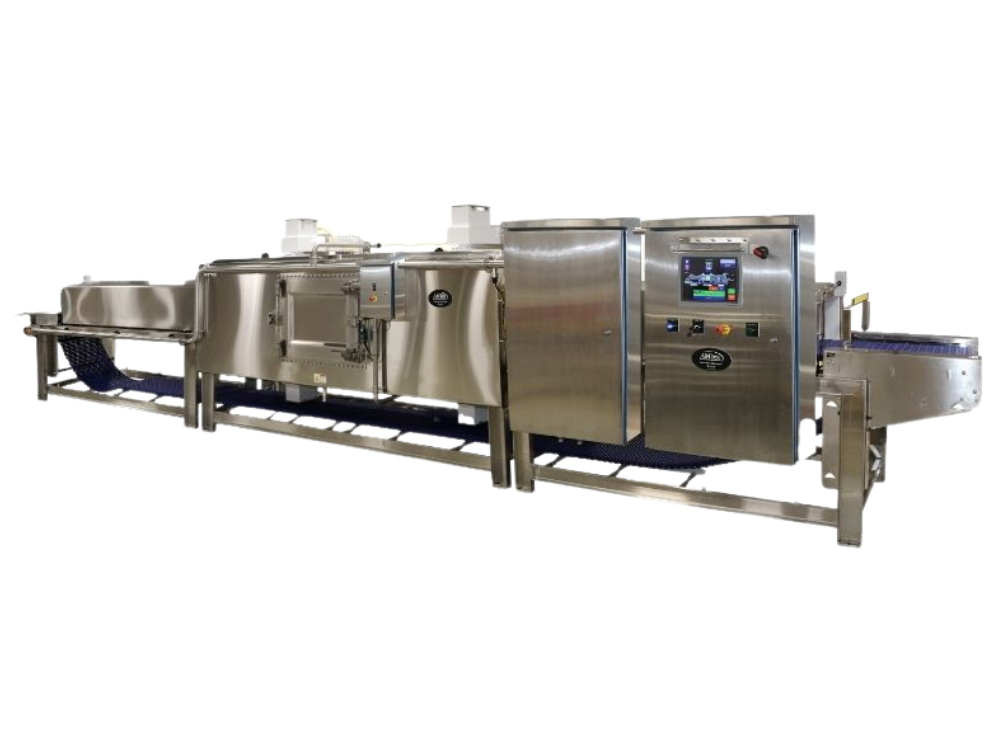
Product Spotlight: AMTek Microwaves
Industrial microwaves are ideal for tempering, cooking and drying a variety of products.


Among the many critical stages in the production of safe and effective medicines, the pharmaceutical filling line stands out for its direct impact on product quality, compliance and patient safety. Whether it’s a sterile vial, a dry powder for inhalation, or a tube of medicinal cream, the pharmaceutical filling process plays a central role in ensuring accurate dosing and maintaining sterile integrity.
This guide offers a practical breakdown of how filling lines operate, why they matter, and what equipment is commonly used depending on the formulation. As part of the broader filling process in the pharmaceutical industry, this stage must function flawlessly to support scalability, minimise risk, and ensure product consistency.
Accurate and sterile filling is fundamental to pharmaceutical production. Unlike other manufacturing sectors, there’s little margin for error when it comes to medications. Each unit—whether it’s a liquid vial, a powdered sachet or a filled tube—must contain exactly the right amount of product, under tightly controlled conditions.
A well-configured pharmaceutical filling line helps ensure:
By investing in the right pharmaceutical filling process, manufacturers can not only meet quality standards but also optimise yield and reduce waste. Ultimately, precision here translates directly to product safety, regulatory compliance, and commercial success.
The key types of pharmaceutical filling machines
Different pharmaceutical products require different filling technologies. The choice of equipment depends on product form (liquid, powder, paste), container type (vials, bottles, tubes), sterility requirements, and production volumes.
Here are the most common machine types found on a pharmaceutical filling line:
Vials—especially for sterile injectables—demand a high level of accuracy and sterile handling. A pharmaceutical vial filling machine typically operates in an isolator or under laminar airflow to prevent contamination.
These machines fill small volumes of liquid with micro-precision, often incorporating stopper placement and sealing in one continuous process. Automation is essential here, not only for speed but for maintaining the sterile chain throughout production.
For dry formulations like antibiotics, inhalants or oral powders, a powder filling machine pharmaceutical setup is used.
These machines must manage powder flow (often inconsistent), prevent dusting and cross-contamination, and ensure dose precision. When working with highly potent APIs, equipment may need to include containment features, making a dry powder filling machine highly specialised and safety-critical.
We have a more in-depth guide on packaging pharmaceutical powders if you need more information.
Used for semi–solid products like creams, ointments and gels, the pharmaceutical tube filling machine must handle both volumetric accuracy and hygienic transfer into collapsible or laminate tubes.
These lines often include folding and sealing capabilities for aluminium or plastic tubes, along with code printing to ensure traceability.
For many pharmaceutical companies, outsourcing to third-party fillers is a strategic way to increase flexibility.
Pharmaceutical contract filling for medications offers access to specialist equipment and regulatory expertise without the capital expenditure. These partners typically run multiple types of filling lines, allowing them to accommodate diverse formulations and batch sizes efficiently.
The pharmaceutical filling process doesn’t operate in isolation—it sits at the heart of an interconnected production system. Once a product is blended or compounded, it enters the filling phase, which must dovetail smoothly with downstream operations such as sealing, inspection, labelling and packaging.
The transition from filling to labelling must be seamless to maintain batch traceability and ensure product identification meets compliance standards. Good integration at this stage supports productivity and helps ensure packaging formats work without hitches. Whether a vial is labelled post-fill or a cream tube is sealed before outer-boxing, timing and precision matter especially when those formats must work efficiently within pre-existing packaging systems.
No pharmaceutical filling system can operate without strict oversight. Regulatory bodies such as the MHRA, EMA or FDA expect documented validation of every critical step in the pharmaceutical filling process—from cleanroom conditions and equipment calibration to in-process checks and final fill volume verification.
To maintain compliance:
Quality control measures often include automated weight checks, camera inspections and container integrity testing, all of which are integrated into the pharmaceutical filling line. The aim is not only to catch errors but to prevent them through robust design and validation.
Well-maintained equipment plays a key role here. Downtime, faulty valves or worn parts can compromise not only efficiency but product safety. That’s why working with an equipment partner that understands pharma’s regulatory landscape—like Omori UK—can be a game-changer for production teams focused on quality and reliability.
A carefully designed pharmaceutical filling line is more than just a set of machines—it’s a precision system that underpins the entire pharmaceutical filling process. By selecting the right filling technologies and ensuring integration with packaging and labelling, manufacturers can scale confidently, maintain quality and meet strict compliance requirements.
Each fill, whether into a vial, tube or sachet, represents the moment where formulation meets final form—making this a mission-critical step in the filling process in the pharmaceutical industry. As you consider improvements to your operation, keep in mind how related systems such as labelling, powder handling and end-of-line packaging contribute to a streamlined, compliant manufacturing environment.
To explore how Omori UK can support your pharmaceutical filling needs with high-performance, validated equipment.
Interested in our packaging solutions, have a question for our team or want to arrange an equipment trial?
Our team is always happy to answer any questions you may have and provide you with the information you need to make the right decision for your business.
Contact us today and one of our experts will get back to you.

Industrial microwaves are ideal for tempering, cooking and drying a variety of products.