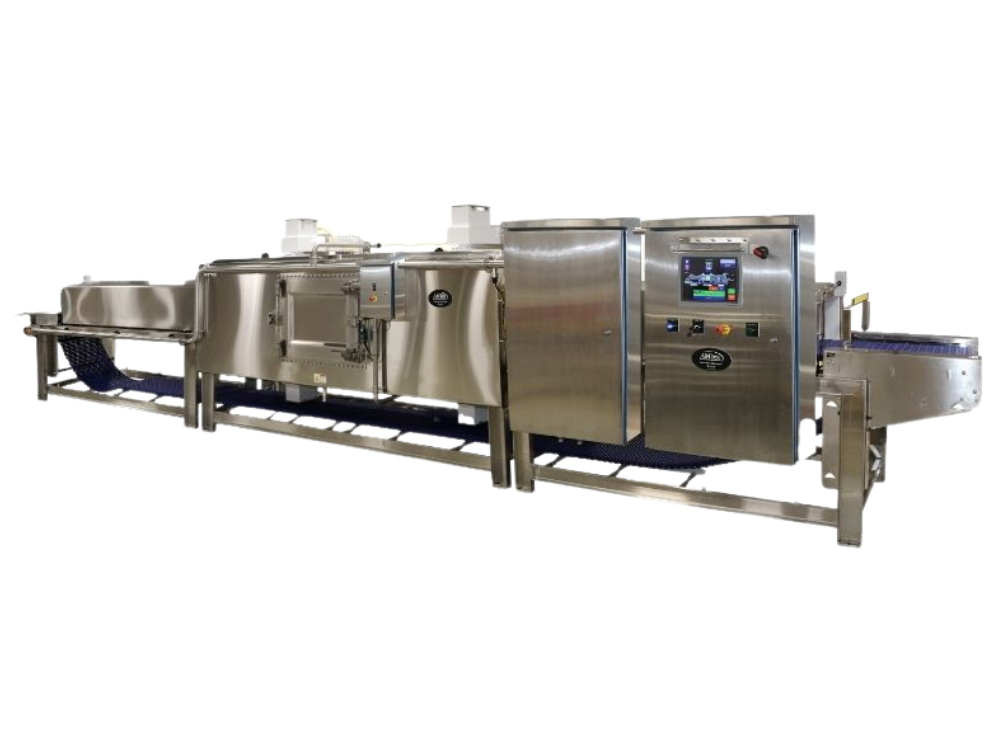
Product Spotlight: AMTek Microwaves
Industrial microwaves are ideal for tempering, cooking and drying a variety of products.


As pharmaceutical manufacturing becomes increasingly automated and tightly regulated, pharmaceutical labelling is emerging as a critical point of focus. It is no longer a back-end task but a core component of quality assurance (QA) and regulatory compliance. From ensuring patients receive the correct medication to meeting serialisation standards for global distribution, the labelling of pharmaceutical products must be accurate, traceable and compliant with a growing body of legislation. Mistakes in labelling don’t just affect production efficiency—they can lead to product recalls, fines, or worse – , pose risks to patient safety. As the expectations around clarity, data traceability and security features grow, getting the label right has never been more essential.
Pharmaceutical labelling goes beyond printed text. It encompasses digital barcodes, tamper‑evident seals, serialisation codes, machine‑readable identifiers and the physical label affixed to the container or package. These elements combine to form a complete label ecosystem designed to deliver clear information, traceability and integrity.
Labelling, packaging and inserts each play distinct roles:
In the production chain, labelling must align with packaging format, production speed and traceability needs to ensure seamless integration.
The major authorities setting the rules: MHRA, EMA, and FDA
In the UK and beyond, labelling of medicines is subject to scrutiny by major regulators including the Medicines and Healthcare products Regulatory Agency (MHRA), the European Medicines Agency (EMA) and the Food and Drug Administration (FDA).
The MHRA states: that “labels must be clear. Healthcare professionals and patients must easily be able to identify the medicine by the label.”
Similarly, best‑practice guidance emphasises legibility, format and layout of labels to minimise medication errors
Following Brexit and new regulatory frameworks such as the Windsor Framework, there are specific UK‑only labelling requirements that must be met as of January 2025, for instance, the “UK Only” label requirement on outer packaging.
The importance of good manufacturing practice (GMP) in labelling
GMP standards apply to labelling just as much as to manufacturing. Every label design, print run, application step, inspection and version change must be validated, controlled and documented under quality systems. This ensures that labelling remains traceable, auditable and compliant throughout production
Labels must clearly identify the medicine—its name (brand or generic), dosage form and strength. A batch or lot number is essential for recall traceability and supply‑chain visibility.
While primary labels may not list full ingredient specifics, they must clearly identify the active substance(s) and strength. Providing transparency in label information builds trust with clinicians, pharmacists and patients alike.
Labels must indicate how the medicine is administered, for example (oral, injectable or, topical etc.), dosage instructions and any user precautions. These elements are critical for safe use.
Expiry date, storage instructions (– “store below 25 °C”, “protect from light” – ) must be clearly visible and legible. These details ensure product integrity until use.
Labels often include regulatory icons (such as tamper‑evident, child‑resistant packaging symbols,) and warnings, for example (“For intravenous use only”, or caution for pregnant women). Clear symbols and text reduce risk of misuse.
The layout of label information—font size, spacing, contrast, hierarchy—is vital. Poor typography can cause important information to be overlooked, leading to errors. Guidance emphasises that label information must be legible and easily understood.
Colour‑coding dosage strengths or container types helps differentiate products at a glance—reducing the risk of confusion between similar names or packaging. This approach aligns with modern labelling logic while still maintaining compliance.
While brand identity and design can influence label aesthetics, compliance must always take precedence. Labels must remain functional, durable, legible and regulatory‑ready—balancing visual identity with operational demands.
In multi‑market distribution, labels often require translation into multiple languages. Even minor translation errors can alter the meaning of instructions or warnings, compromising safety and compliance. Because the labelling of pharmaceutical products spans multiple territories, accuracy is non‑negotiable.
Modern systems increasingly rely on unique identifiers (GTINs, data matrix codes, RFID) to trace medicines from manufacturing through distribution to the patient. These features enhance visibility, support recall processes and help prevent counterfeiting.
To combat falsified medicines, the Falsified Medicines Directive and UK‑specific requirements impose serialisation and tamper‑evident features. In the UK context, labelling must now also integrate with broader pharmaceutical filling line processes and distribution systems to ensure full traceability.
Each dosage form and packaging format presents unique labelling challenges. Vials and ampoules demand small, high‑precision labels, while cartons for tablets might allow more space. Powders may require label materials that resist abrasion or moisture. The core tenets of pharmaceutical labelling remain, but the execution must adapt to the format.
Blister packs often use foil backing—labels must adhere securely and remain legible through de‑blistering and inventory handling. Vials and ampoules often have curved surfaces and may involve small text—specialised printing and label placement are critical to meet regulatory demands.
These layers all contribute to compliance, traceability and supply‑chain visibility.
Consistency across label layers is essential—not just for branding, but for reducing errors and ensuring each tier reflects the same batch, expiry and regulatory data. The use of appropriate pharmaceutical packaging labels supports this consistency.
Labelling often requires updates—whether due to regulatory changes, packaging redesigns or product reformulations. Manufacturers should have robust version control systems, change‑management workflows and validation processes so that label revisions don’t disrupt production or introduce non‑compliance.
Maintaining audit trails, artwork history, approval records and print logs are essential. These systems support inspections, traceability and ensure the labelling process is fully compliant with regulatory expectations for the labelling of pharmaceutical products.
Implementing proactive checks, vision inspection of labels, and quality audits help prevent these pitfalls and bolster compliance.
Automation in labelling—such as vision systems that verify print quality, automated label applicators with version‑control integration, and barcode scanners that validate data—reduces human error and boosts line throughput. For manufacturing teams focused on scaling, automation is a game‑changer in labelling operations.
When labelling is tightly integrated with upstream (such as filling) and downstream (such as packaging) processes, manufacturers can avoid bottlenecks, reduce rejects and improve traceability.
Effective labelling supports the broader pharmaceutical packaging systems so that operations flow smoothly and compliantly.
Sustainability is no longer optional. Manufacturers are exploring biodegradable adhesives, thinner label stock, recycled liners and inks with lower environmental impact—all while meeting labelling compliance standards.
Eco‑friendly labelling materials must still meet legibility, durability and regulatory requirements. As the industry moves towards greener practices, labelling within the broader framework of sustainable pharmaceutical packaging becomes not only a compliance decision but a business‑strategy decision.
Labels are only as good as the process behind them. Cultural factors—training of operators, management of label stock, version checks, and upkeep of equipment—make a difference. Ensuring your team understands the importance of accurate labellingcy in labelling pharmaceuticals helps build a strong compliance foundation.
Periodic audits, refresher training and visual inspections aid long‑term labelling quality. Continuous improvement in labelling workflows supports ongoing compliance and operational excellence.
Next‑gen labelling incorporates QR codes, RFID/NFC tags, augmented‑reality links and cloud‑connected verification. These smart labels enhance patient safety, brand protection and supply‑chain transparency—elevating pharmaceutical labelling into a digital‑first domain.
Emerging technologies such as blockchain for immutable audit trails and AI‑driven label print‑inspection systems are reshaping how manufacturers meet compliance. The evolution of labelling is now tied to real‑time monitoring, automated workflows and digital record keeping.
As pharmaceutical regulation tightens and supply chains grow more complex, pharmaceutical labelling has become an essential part of operational excellence. It’s not just about applying a sticker—it’s about delivering vital information, maintaining traceability, and ensuring every product is safe and compliant.
By understanding the nuances of labelling of pharmaceutical products, manufacturers can prevent costly errors, meet regulatory demands and protect patient outcomes. And because labelling is so tightly connected with other critical processes like filling and packaging, it’s important to approach it as part of a unified production strategy.
To ensure your labelling operations are ready for the next generation of compliance and performance, now’s the time to take a closer look at how your production line handles integration, accuracy and scale.
Interested in our packaging solutions, have a question for our team or want to arrange an equipment trial?
Our team is always happy to answer any questions you may have and provide you with the information you need to make the right decision for your business.
Contact us today and one of our experts will get back to you.

Industrial microwaves are ideal for tempering, cooking and drying a variety of products.