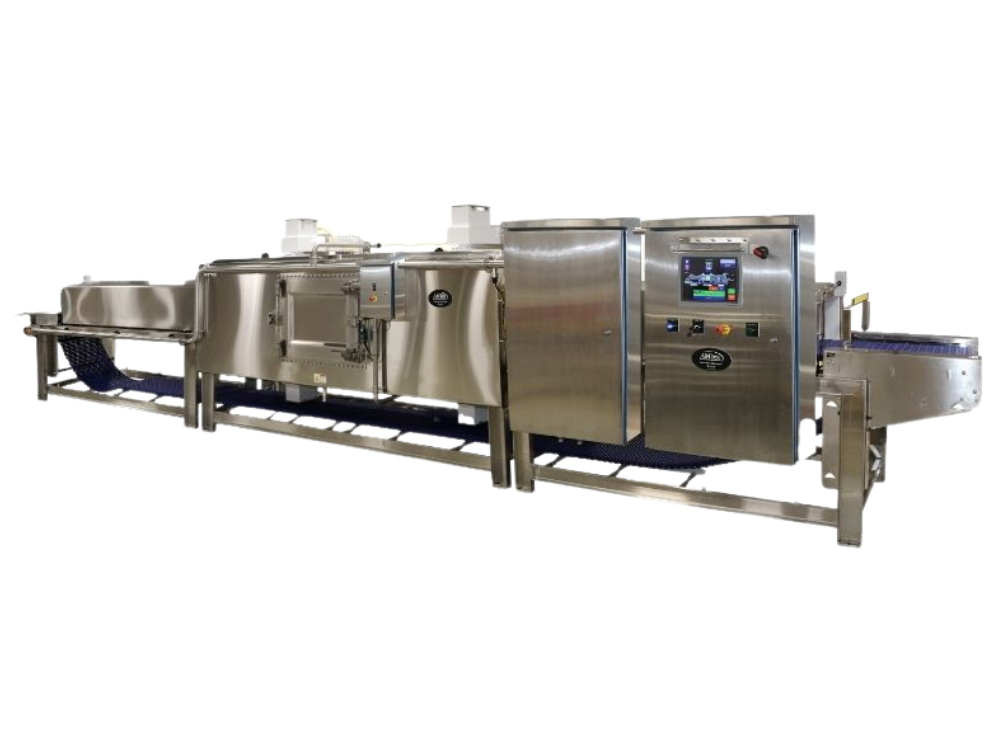
Product Spotlight: AMTek Microwaves
Industrial microwaves are ideal for tempering, cooking and drying a variety of products.


Pharmaceutical automation is reshaping how medicines are made, packed and checked before they reach patients. As product portfolios grow and regulators raise the bar on quality, many manufacturers are looking for reliable ways to improve efficiency, accuracy and compliance without compromising safety.
By automating critical stages of the production process, from raw material handling through to final inspection, manufacturers can achieve consistent product quality, faster throughput and reduced human error. Modern automated technologies manage dosing, filling, sealing, labelling and inspection with high repeatability. They also gather detailed data to support validation and audit readiness.
From a business perspective, the role of pharmaceutical automation is to help manufacturers control costs by improving line utilisation and reducing waste.
Automated changeovers, recipe control and diagnostics minimise downtime and allow teams to focus on higher value tasks such as process optimisation and continuous improvement.
Together, these benefits make automation a central pillar of modern pharmaceutical manufacturing strategy rather than a nice-to-have add-on.
Automation in raw material handling starts with accurate identification and measurement. Barcode scanning and automated weighing systems help ensure that the right materials are used in the right quantities. Conveyors, lifting aids and controlled transfer systems reduce manual handling, which improves safety for operators and reduces the risk of mix ups or contamination.
By tracking materials as they move through the factory, automated systems also provide better traceability. Manufacturers can see exactly which batch of raw material went into which batch of finished product, which is essential for robust quality management.
In the mixing and blending stage, automated recipe management ensures that each ingredient is added in the correct order and proportion. Sensors monitor parameters such as temperature and mixing speed, adjusting them as needed to maintain consistency.
This reduces reliance on manual judgement and supports more repeatable outcomes. Automated systems can record process conditions for every batch, so any deviations can be investigated and corrective actions taken quickly.
Granulation and drying steps can have a major impact on the final tablet or capsule performance. Automated control of airflow, temperature and time helps maintain the target particle size and moisture content.
By using automation in pharmaceutical manufacturing at this stage, companies can reduce variability and improve yield. Advanced systems can also adjust parameters in real time based on sensor feedback, which helps keep processes within tight limits.
Automated tablet presses and capsule fillers manage factors such as compression force, fill depth and speed with high accuracy. This ensures that each dose contains the correct amount of active ingredient.
For liquids, automated filling machines handle tasks such as bottle positioning, volume control and stopper placement. Precision nozzles and feedback systems maintain fill accuracy even at high speeds. This combination of control and throughput is difficult to achieve with manual processes.
Once products are formed or filled, packaging automation takes over. Cartoners, flow wrappers, blister machines and case packers handle the physical protection and presentation of the product. Automated serialisation and labelling systems help meet regulatory requirements for traceability.
Inspection systems are integrated throughout packaging to check for missing components, incorrect codes or defective seals. This ensures that only compliant, safe packs are released for distribution.
A range of automation technologies come together to support an efficient, compliant pharmaceutical production environment.
Automated dosing and dispensing systems are used early in the process to measure and deliver powders, granules or liquids with high precision. These systems remove much of the guesswork and variation associated with manual scooping or pouring.
By keeping dosing within tight tolerances, they help maintain content uniformity and reduce the risk of out of specification batches. They also limit operator exposure to active substances and minimise cross contamination by using enclosed transfer routes and cleaning routines.
Automated filling and sealing machinery sits at the heart of many pharmaceutical automation projects. These machines are designed to handle vials, bottles, syringes and other containers while maintaining sterility and accuracy.
In a pharmaceutical filling line, automated systems manage container infeed, filling, stoppering, capping and in some cases lyophilisation transfer. Recipe driven control allows quick changeover between formats without sacrificing
performance. Sealing systems ensure tight, reliable closure, which protects product integrity throughout its shelf life.
Once primary packaging is complete, automated packaging and labelling technologies take over. Cartoners, shrink wrappers, case packers and palletisers support high speed formats while maintaining pack stability and presentation.
Labelling systems apply product labels, barcodes and serialisation codes in line with regulatory expectations. They validate each code, log it and connect it to batch information.
Vision inspection systems use cameras and smart software to verify critical features such as fill level, seal integrity, label presence and printed information. They can detect defects that are difficult for the human eye to spot consistently, especially at high speeds.
By integrating these systems with other automation systems in pharmaceutical industry lines, manufacturers can reject non-compliant products automatically and capture images for investigation. This supports strong quality assurance and builds confidence in the reliability of the process.
Benefits of automation in pharmaceutical manufacturing
Every investment in automation should deliver clear, measurable benefits. In pharmaceutical manufacturing, four stand out.
Regulators expect pharmaceutical manufacturers to understand their processes, control them and prove that control through documentation. Pharmaceutical automation can make this easier and more robust.
Automated systems collect data on temperatures, pressures, speeds, weights and many other parameters. This information feeds into quality management systems and can be reviewed against predefined limits. It supports compliance with MHRA, EMA and FDA expectations and helps build a strong evidence base for product release decisions.
Standardised, automated workflows reduce the number of manual decisions and actions in a process. Operators are guided by clear instructions and interlocks, which prevents them from skipping steps or using the wrong settings and makes it easier to validate processes.
Many automated platforms provide real-time dashboards and alarms. If a parameter drifts towards a limit, the system can alert operators or automatically adjust settings. This strengthens process control and helps prevent minor issues from turning into major deviations.
Not every manufacturer can replace whole lines at once. The good news is that automation in pharmaceutical manufacturing can often be introduced gradually. Start with areas that deliver the strongest return on investment and expand over time, guided by performance data and lessons learned from earlier projects.
Modular systems allow manufacturers to add or replace sections of a line, such as filling heads, capping stations or case packers. These targeted upgrades can deliver quick wins in accuracy, speed or safety without the disruption of a full rebuild.
Modern control systems and communication standards mean that new equipment can often be integrated with legacy machines. Gateways and interface modules pass data between systems so that older equipment can operate within a more automated, connected environment.
When introducing new automation, it is important to consider the complete packaging flow. Changes in one area, such as higher filling speeds, must be matched by downstream capabilities in cartoning, labelling and case packing. Developing packaging systems that ensure the entire line can operate at a consistent, efficient pace without creating new bottlenecks.
Pharmaceutical automation is now a fundamental enabler of safe, sustainable and scalable medicine manufacturing. By applying automation in pharmaceutical manufacturing across formulation, filling, packaging and inspection, companies can improve accuracy, enhance sterility, increase throughput and strengthen compliance.
With deep expertise in automated filling, packaging and inspection systems, Omori UK supports manufacturers on this journey. Whether updating a single filling line or designing a more integrated packaging flow, the right automation strategy can help organisations meet current demands and prepare for future growth.
Interested in our packaging solutions, have a question for our team or want to arrange an equipment trial?
Our team is always happy to answer any questions you may have and provide you with the information you need to make the right decision for your business.
Contact us today and one of our experts will get back to you.

Industrial microwaves are ideal for tempering, cooking and drying a variety of products.