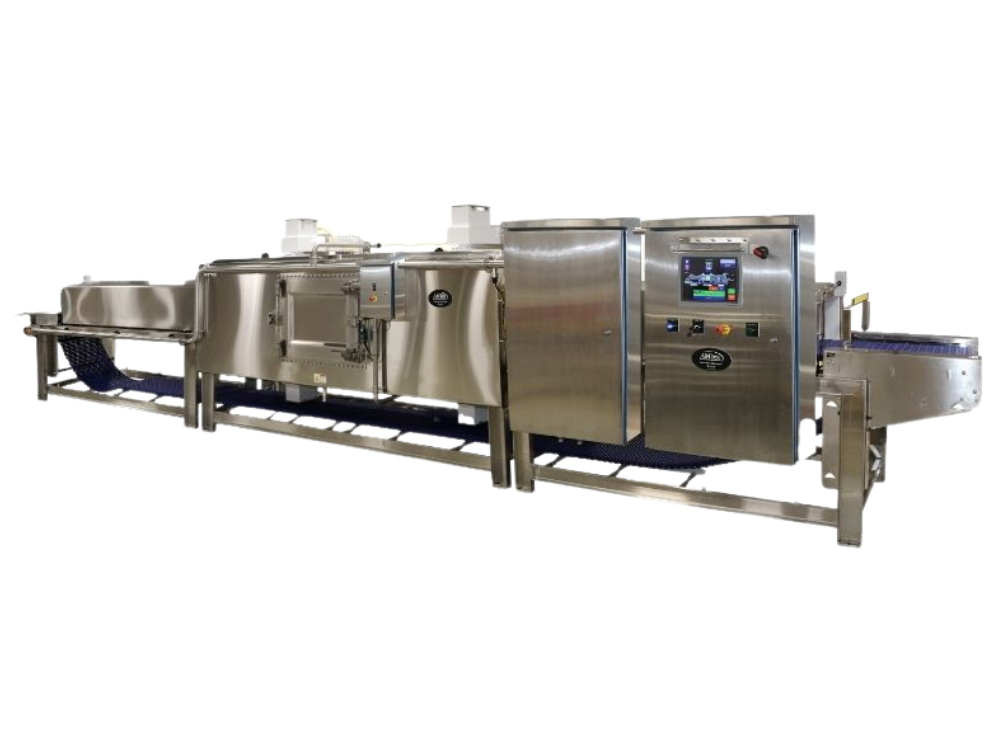
Product Spotlight: AMTek Microwaves
Industrial microwaves are ideal for tempering, cooking and drying a variety of products.


Pharmaceutical stability testing ensures that medicines maintain their quality, safety and efficacy throughout their shelf life. Regulatory bodies including the International Council for Harmonisation and the World Health Organisation have established comprehensive frameworks that pharmaceutical manufacturers must follow to bring products to market.
Understanding these stability testing requirements is essential for maintaining product integrity from manufacturing through to patient use.
Pharmaceutical stability encompasses five key facets: chemical, physical, microbiological, therapeutic and toxicological. Each aspect plays a vital role in ensuring medicines remain safe and effective under various storage and environmental conditions.
Stability testing provides evidence on how a drug substance or drug product varies with time under the influence of physical, chemical or microbiological changes such as temperature, pH, humidity, light and radiation. This process establishes critical parameters including shelf life, storage conditions and retest periods for both active pharmaceutical ingredients and finished pharmaceutical products.
The testing process considers multiple factors that can compromise pharmaceutical integrity. Temperature fluctuations, moisture exposure, light sensitivity and oxidation can all trigger degradation reactions that affect potency and safety. Manufacturing processes, container-closure systems and interactions between active ingredients and excipients must also be evaluated to build a complete stability profile.
Long-term testing should be performed over a minimum of 12 months at 25°C ± 2°C with 60% RH ± 5% RH or at 30°C ± 2°C with 65% RH ± 5% RH. These conditions simulate real-world storage environments and help determine appropriate shelf- life claims.
Intermediate and accelerated testing should cover a minimum of six months at 30°C ± 2°C with 65% RH ± 5% RH and 40°C ± 2°C with 75% RH ± 5% RH respectively.
Accelerated studies increase degradation rates to predict long-term effects and evaluate how products respond to temporary excursions outside recommended storage conditions during shipping.
ICH Q1A(R2) defines long-term, intermediate and accelerated stability studies for new drugs whilst ICH Q1B establishes procedures for photostability testing. These harmonised guidelines enable mutual acceptance of stability data across the European Union, Japan and the United States.
Additional protocols address specific product categories. ICH Q5C covers biotechnological and cell-derived products, whilst ICH Q3A and Q3B regulate impurity analysis in active pharmaceutical ingredients and finished products. ICH Q6A and Q6B specify quality and stability criteria for active pharmaceutical ingredients, pharmaceuticals and biotechnological products.
The consolidated ICH Q1 guideline supersedes earlier iterations and provides comprehensive stability guidance across all molecule types. It incorporates science-based and risk-based principles that can be applied throughout a product’s lifecycle, from initial registration through post-approval changes.
ICH defines four climatic zones based on temperature and relative humidity, which are crucial for ensuring stability across regions. Zone I represents temperate climates, Zone II covers Mediterranean and subtropical regions, whilst Zones III and IV encompass hot and humid tropical climates.
Testing requirements vary depending on the intended market. Products destined for hot and humid regions must demonstrate stability under more severe conditions than those intended for temperate climates. This geographical approach ensures medicines remain effective regardless of where they are stored or used.
Mean kinetic temperature calculations help determine appropriate testing conditions for each zone. This metric accounts for temperature fluctuations over time rather than simple averages, providing a more accurate assessment of thermal stress on pharmaceutical products.
Stability studies should include testing of those attributes susceptible to change during storage that are likely to influence quality, safety or efficacy, covering physical, chemical, biological and microbiological attributes.
Physical testing monitors characteristics including appearance, colour, clarity, particle size distribution and crystalline form. Changes in these attributes can indicate degradation even when chemical composition remains unchanged. For solid dosage forms, dissolution testing ensures consistent drug release profiles throughout the shelf life.
Packaging considerations form an integral part of physical stability assessment. Understanding primary and secondary packaging in pharmaceuticals ensures container-closure systems provide adequate protection against moisture, oxygen and light. Semi-permeable containers require humidity-controlled testing, whilst impermeable containers allow testing under any controlled conditions since moisture ingress is not a concern.
Functionality testing evaluates dose delivery systems such as inhalers, pumps and applicators. These components must maintain their mechanical performance throughout the product’s shelf life to ensure accurate and consistent dosing.
Stress testing should include the effect of temperatures in 10°C increments above accelerated testing, humidity of 75% RH or greater where appropriate, and evaluation of susceptibility to oxidation and photolysis. These studies help identify degradation pathways and establish the inherent stability characteristics of drug substances.
Testing should evaluate hydrolysis susceptibility across a wide pH range when products are in solution or suspension. Photostability testing forms an integral part of stress testing protocols and must follow standardised conditions to generate comparable data.
Analytical procedures must be fully validated and stability-indicating. These methods need to separate and quantify degradation products whilst accurately measuring the active pharmaceutical ingredient. High-performance liquid chromatography remains the preferred technique due to its precision, ease of use and ruggedness.
Testing frequency follows a structured schedule. For products with a proposed shelf life of at least 12 months, testing at the long-term storage condition should normally be every three months over the first year, every six months over the second year and annually thereafter.
Results must be evaluated against predetermined acceptance criteria. Specification limits should consider all available stability information from development studies. Release specifications may be more stringent than shelf- life specifications to ensure quality is maintained through to expiration.
Proper equipment selection plays a crucial role in maintaining pharmaceutical stability throughout manufacturing, testing and storage. Contamination prevention must be integrated at every stage to protect product integrity.
Preventing pharmaceutical contamination requires careful attention to machinery design and maintenance. Equipment surfaces that contact products must be constructed from inert materials that do not leach substances or harbour microorganisms. Regular cleaning, validation and monitoring ensure contamination risks remain controlled.
Stability chambers provide controlled environments for testing programmes. These units maintain precise temperature and humidity conditions with continuous monitoring and alarm systems. Walk-in chambers accommodate large-scale studies whilst reach-in units suit smaller sample volumes.
Pharmaceutical inspection systems detect physical defects and packaging irregularities that could compromise stability. Automated inspection removes human variability whilst increasing throughput and detection sensitivity. X-ray inspection systems identify foreign particles and verify fill levels without opening containers.
Tamper-evident seals provide an additional layer of protection. These security features help maintain stability by preventing unauthorised access whilst providing visual confirmation of product integrity throughout distribution chains.
Pharmaceutical packaging regulations ensure primary and secondary packaging systems work together to maintain stability. Primary containers provide direct product protection against environmental stressors, whilst secondary packaging offers additional mechanical protection during handling and transport.
Maintaining detailed documentation throughout stability programmes demonstrates regulatory compliance. Study protocols should outline testing schedules, analytical methods, acceptance criteria and storage conditions before studies begin. Regular reporting captures data trends and identifies potential issues early.
Out-of-specification results require immediate investigation to determine root causes. Confirmed significant changes must be reported to regulatory authorities along with assessments of potential impacts on marketed batches. This transparency ensures patient safety remains the paramount concern.
Ongoing stability programmes monitor commercial batches throughout their lifecycle. Annual testing of retained samples provides continued assurance that products maintain their quality attributes under real-world distribution and storage conditions.
Pharmaceutical stability testing forms the cornerstone of quality assurance in drug manufacturing. By following established guidelines from regulatory bodies and implementing robust testing protocols, manufacturers can ensure their products maintain efficacy, safety and quality throughout their intended shelf- life.
For manufacturers seeking to optimise their stability testing programmes or enhance their quality control infrastructure, having the right partner makes all the difference. Contact Omori UK to discover how our pharmaceutical packaging and inspection solutions can support your stability and quality objectives.
Interested in our packaging solutions, have a question for our team or want to arrange an equipment trial?
Our team is always happy to answer any questions you may have and provide you with the information you need to make the right decision for your business.
Contact us today and one of our experts will get back to you.

Industrial microwaves are ideal for tempering, cooking and drying a variety of products.