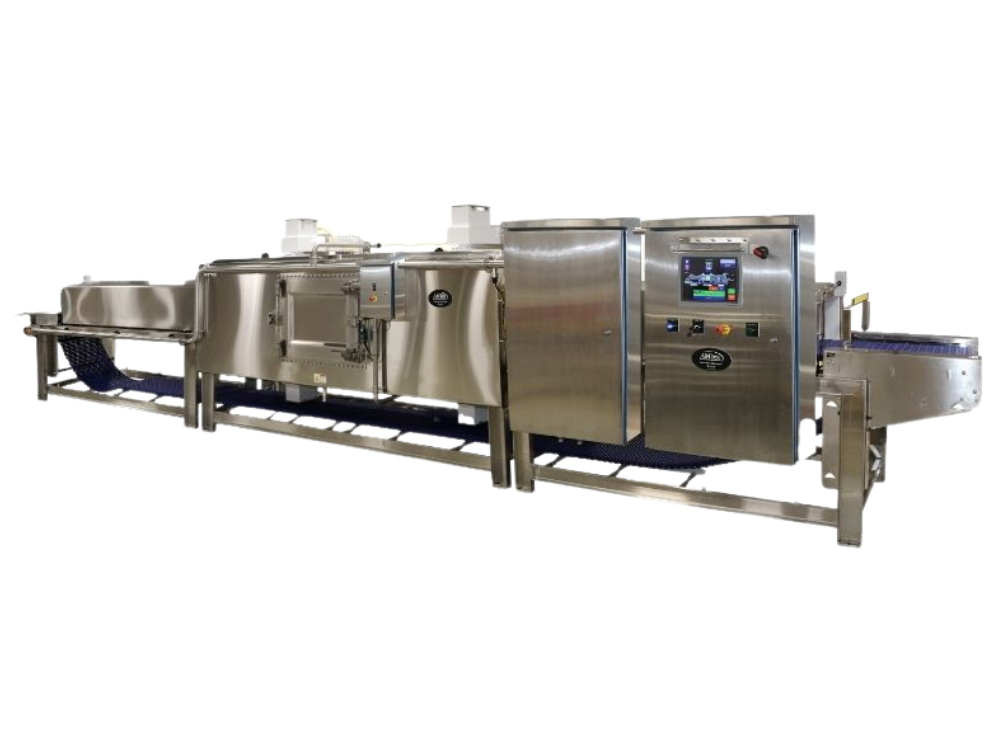
Product Spotlight: AMTek Microwaves
Industrial microwaves are ideal for tempering, cooking and drying a variety of products.

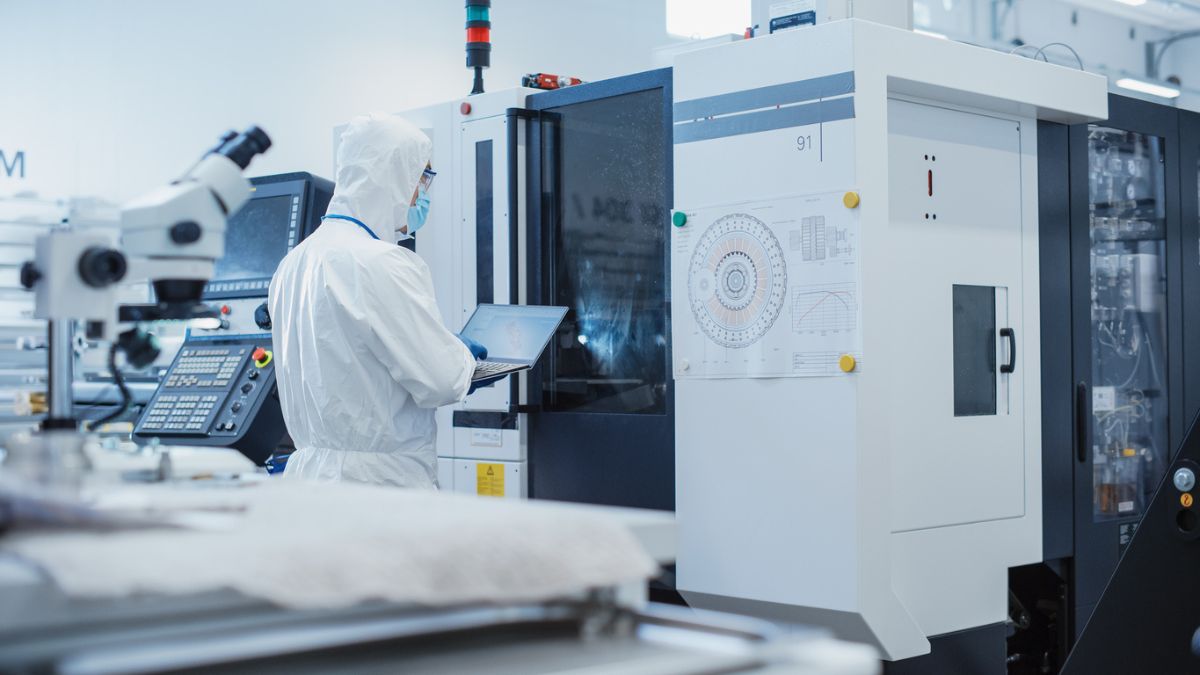
As technological advancements reshape the food quality control processes, x-ray food inspection systems have become indispensable for food manufacturers looking to deliver safe and high-quality products. With their unparalleled ability to detect foreign contaminants, these systems have enhanced food safety standards and production efficiency, redefining quality assurance in food production.
X-ray food inspection systems use low-energy X-rays to scan packaged and unpackaged food for any potential contaminants or defects. Unlike traditional metal detectors, X-ray technology identifies a wide range of foreign objects, from glass and metal to bone fragments and dense plastics, ensuring comprehensive protection.
Food manufacturers integrate these systems at various stages of production to detect contamination, ensuring products meet safety and regulatory standards before reaching consumers. By minimising risks, they not only comply with rigorous industry regulations but also safeguard their brand reputation.
X-ray food inspection machines operate using a high-frequency X-ray beam that scans products on the production line . When the X-ray passes through an item, it captures the density variations caused by any foreign materials or irregularities within the food. These density differences are translated into detailed images that highlight any anomalies, enabling precise detection.
In most systems, contaminated or defective items are immediately removed from the line, helping prevent rework, recalls or worse, unsafe products reaching consumers. The x-ray inspection for food industry systems typically includes software with AI and machine learning capabilities, making them highly adaptable to various food types and package configurations.
Traditional methods, such as metal detectors, are limited to ferrous and non-ferrous metals. X-ray systems, however, identify a broader spectrum of contaminants, including glass, bones, stones and high-density plastics, which pose potential hazards if undetected.
Beyond foreign object detection, X-ray systems also verify product integrity. They assess aspects like weight, fill levels and even seal quality, essential for packaged goods where improper sealing or inaccurate fill levels can compromise product safety and quality.
Compliance with stringent food safety standards, such as BRCGS, FSA, and HACCP, is vital in food production. X-ray inspection systems enable manufacturers to meet these regulatory requirements, enhancing quality control and minimising risk.
X-ray systems help reduce waste by allowing swift identification and removal of defective items early in production. By catching issues before they progress further along the production line, manufacturers lower rework costs and avoid costly recalls.
For more details on suitable inspection systems, explore Omori UK’s range of X-ray inspection systems, crafted to meet the diverse needs of food manufacturers.
As automation revolutionises food production, X-ray food inspection systems have become an integral part of fully automated quality control processes. Automated food production relies on synchronised, high-speed operations and X-ray inspection technology plays a pivotal role in ensuring these streamlined processes maintain high safety and quality standards without compromising on throughput.
Here’s how x-ray for food production systems enhance the efficiency, consistency and reliability of automated food production lines :
X-ray inspection systems in automated lines offer real-time scanning and rejection, identifying and removing contaminated or defective items in a fraction of a second. Integrated with conveyor systems, these machines can perform instant analysis, enabling automated lines to maintain high speeds without pausing for manual inspection. This continuous operation maximises throughput and allows manufacturers to meet tight production quotas while adhering to stringent quality standards.
X-ray machines for food inspection are equipped with advanced software that collects and analyses inspection data. Automated systems use this data to monitor trends, track contaminant occurrences, and even predict issues before they affect the line. This data-driven approach enables proactive quality management, allowing manufacturers to adjust processes, reduce waste, and address potential production bottlenecks.
In automated production, maintaining consistent product quality across large batches is crucial. X-ray inspection systems offer precise and repeatable results, unaffected by human fatigue or subjective assessment. Each item is evaluated with the same sensitivity, ensuring uniform quality control across every product. This consistency reduces the risk of overlooked contaminants or defects, providing consumers with safer, high-quality products.
Modern X-ray food inspection machines are designed to be adaptable, scanning various product types and packaging formats. Automated production lines often handle diverse product batches, from solid to liquid foods and varied packaging styles. X-ray systems for food industry are customisable and compatible with multiple product configurations, making them versatile solutions in dynamic production environments where product types frequently change.
The integration of X-ray systems with Industry 4.0 and IoT technologies offers additional advantages. Connected to a central monitoring system, these X-ray machines can communicate inspection results, maintenance needs and performance metrics in real-time. This connectivity allows operators to manage and troubleshoot systems remotely, further supporting seamless production continuity and reducing downtime across automated lines.
Automation aims to reduce manual labour and mitigate human error, especially in high-risk areas like quality control. X-ray inspection systems are designed to operate with minimal human intervention, handling detection, analysis and rejection tasks autonomously. This ensures greater safety for both operators and consumers while allowing human resources to focus on other strategic aspects of production.
By embedding x-ray inspection systems within automated food production lines, manufacturers achieve a more reliable and efficient production environment. Not only do these systems protect consumer health, but they also enhance productivity, optimise operational costs, and align with the demands of modern, high-speed food production.
Food production varies across sectors, from meat and dairy to confectionery and bakery. X-ray inspection systems are tailored to detect contaminants in specific products based on density and consistency, adapting to items like:
X-ray inspection systems ensure that each sector meets rigorous safety standards and delivers the highest quality.
X-ray inspection systems are entirely safe. These machines use low-energy X-rays that are well below harmful levels for both food products and operators. No radiation remains in the food after inspection, and the amount used is controlled to ensure safety in food handling and processing environments.
Regulated by global health and safety organisations, the technology has been extensively tested and proven to be a non-invasive, reliable method for food inspection. Rest assured, the safety of X-ray inspection is endorsed by organisations such as the World Health Organisation and the European Food Safety Authority.
When selecting an x-ray inspection system for the food industry, it’s essential to consider factors like:
X-ray food inspection systems are a significant advancement, offering unparalleled safety and quality assurance. By enabling the detection of various contaminants, ensuring product integrity and supporting regulatory compliance, these systems enhance both consumer safety and manufacturer confidence.
Omori UK offers a range of x-ray machines for food inspection that meet the stringent demands of today’s food industry. With the continuous evolution of technology, these systems provide an invaluable safeguard, fostering trust, quality and efficiency across food production lines.
For businesses invested in maintaining the highest standards, adopting X-ray inspection technology is an invaluable asset that not only upholds brand reputation but also fortifies consumer confidence in product safety.
Interested in our packaging solutions, have a question for our team or want to arrange an equipment trial?
Our team is always happy to answer any questions you may have and provide you with the information you need to make the right decision for your business.
Contact us today and one of our experts will get back to you.

Industrial microwaves are ideal for tempering, cooking and drying a variety of products.