Visit us at UKPackaging Expo
10–11 Nov · Exhibition Centre Liverpool · Stand E26.


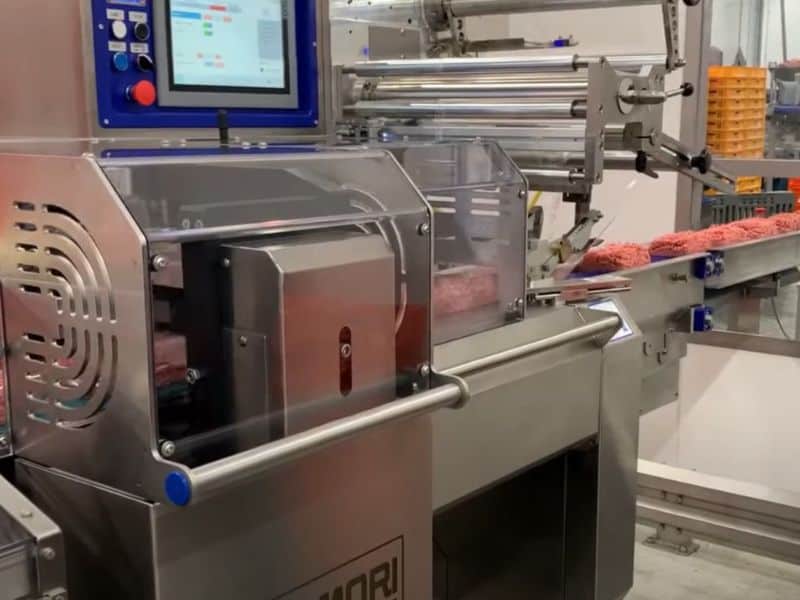
A horizontal flow wrapping machine forms packaging film around a product as it moves horizontally through the wrapping process. It is commonly considered for individual products or controlled groups that can be presented consistently and enclosed in a repeatable sealed pack.
Omori’s flow-wrapper range is designed for applications where product handling, pack presentation and reliable integration with the wider line all matter. The wrapper itself is only one part of the decision: product behaviour, feeding, film, seal requirements, output, cleaning and downstream equipment shape the correct configuration.
This guide explains how horizontal flow wrapping works, where it fits and what manufacturers should establish before selecting a machine.
What is a horizontal flow wrapping machine?
A horizontal flow wrapping machine feeds products along a horizontal path while packaging film is formed around them and sealed to create the finished pack. The process is often described as horizontal form fill and seal. Omori’s flow wrap machine options can be assessed around the product, required pack and production-line conditions.
A typical system combines controlled product infeed, film delivery and forming, longitudinal sealing, end sealing and pack separation, followed by discharge to inspection or downstream packaging.
Horizontal flow wrapping is commonly considered for products such as bakery items, sweets, snacks, meat and poultry, cheese, fresh produce and pharmaceutical products. Suitability still depends on the individual product, its presentation to the infeed and the required pack.
How horizontal flow wrapping works
1. Product infeed
Products enter the machine in a controlled sequence. Their spacing, position and stability affect how consistently they move through the wrapping process.
2. Film forming
Packaging film is drawn through the machine and formed around the product. Film dimensions and behaviour must suit both the machine configuration and the desired pack.
3. Sealing and separation
The film is sealed around the product and separated into individual packs. Seal position, pack dimensions and the risk of product or residue entering the sealing area need to be assessed for the application.
4. Discharge and downstream handling
Finished packs may move to coding, labelling, inspection, cartoning or case packing. These interfaces can affect the reliability of the complete line.
When is a horizontal flow wrapper the right choice?
Horizontal flow wrapping is commonly used for products including bakery items, sweets, snacks, meat and poultry, cheese and pharmaceutical products. It is best suited where products can be presented consistently to the infeed and enclosed in a flexible-film pack with controlled presentation and sealing.
Omori should be involved early where the requirement extends beyond a straightforward wrapper selection. Product handling, film choice, seal configuration, output, available space and integration with existing equipment can all affect the final solution. Omori’s horizontal flow-wrap machines are available in different widths and top- or bottom-sealing configurations, with bespoke options available where the product or production line requires a more tailored approach.
The starting point should therefore be the product, required pack and existing line, not a generic machine specification. Reviewing those elements together allows Omori to establish whether a standard configuration is suitable or whether the wider flow-wrapper solution needs to be adapted around the application.
Product category alone does not confirm suitability. Shape, stability, fragility, surface condition, temperature, variation and the possibility of crumbs, moisture or residue entering the sealing area can all change the engineering requirement.
The strongest starting point is therefore a product sample, a defined pack requirement and information about the existing line. Omori can use this application detail to establish whether horizontal flow wrapping is appropriate and what further testing or configuration work may be required.
When might another packaging approach be more suitable?
Horizontal flow wrapping is not automatically the best option for every product. Products that cannot be presented consistently, are highly unstable, require a rigid container, or need a different filling and sealing process may require another packaging approach. Early qualification prevents the machinery discussion from being driven by terminology alone.
Omori’s wider packaging machinery capability allows the requirement to be considered beyond a single machine type where the product or production line calls for a different solution.
Five factors that determine the right configuration
1. Product handling and orientation
Can the product be presented consistently? Record its dimensions, weight, expected variation, fragility and required orientation in the finished pack. Products that are unstable or easily damaged may require more considered infeed and handling arrangements.
2. Pack format, film and seal requirements
Define the finished pack before confirming the machinery. Include pack dimensions, seal position, printed-film registration where relevant, coding space and the protection required during storage, handling and distribution. Film compatibility and seal performance should be confirmed for the application rather than assumed.
3. Required output and product flow
The relevant measure is not simply the wrapper’s headline speed. Upstream supply, product spacing, manual or automated loading, changeovers, inspection and downstream capacity all affect sustainable operating output.
4. Cleaning, access and production environment
Cleaning frequency, access to the infeed and sealing areas, film changes, maintenance and operator safety should be considered at specification stage. These requirements vary by product and production environment and require Omori confirmation for the proposed application.
5. Integration and long-term support
A horizontal flow wrapper may need to connect with conveyors, coding, checkweighing, inspection, labelling, cartoning or case packing. Clear responsibility for each interface, alongside maintenance access, operator training and service support, helps protect the value of the complete system.
What to prepare before speaking to Omori
| Information | What to provide |
|---|---|
| Product details | Samples, dimensions, weight, variation, surface and fragility. |
| Pack requirement | Pack size, orientation, seal position, presentation and coding or labelling needs. |
| Material requirement | Proposed film, seal expectations and any barrier or handling requirements. |
| Line context | Upstream feed, downstream equipment, inspection, reject handling and available space. |
| Operational needs | Required output, changeovers, cleaning, maintenance and operator access. |
This information allows Omori to assess the actual application rather than recommend a generic machine model.
Why assess the complete application with Omori?
The right horizontal flow-wrapping solution is defined by the relationship between the product, film, pack and production line. Omori can assess these requirements together, including how the product reaches the wrapper, how the pack should be formed and sealed, and how the machine will interact with surrounding equipment.
For larger, more automated or more complex requirements, the solution may extend beyond the wrapper itself. Omori’s wider packaging machinery capability provides a route to discuss the line as a connected system rather than a standalone purchase.
For broader supplier and specification considerations, see the Flow Wrapping Machine Buying Guide.
Frequently asked questions
What is the difference between a horizontal flow wrapper and a flow wrapping machine?
A horizontal flow wrapper is a type of flow wrapping machine in which products move horizontally through the wrapping process. Machine terminology varies, so product and pack requirements should drive the discussion.
What products are suitable for horizontal flow wrapping?
Common application areas include bakery products, sweets, snacks, meat and poultry, cheese, fresh produce and pharmaceutical products. Suitability still depends on product behaviour, pack format, film and line setup.
Is horizontal form fill and seal the same as horizontal flow wrapping?
The terms are commonly used for closely related processes in which film is formed around a horizontally fed product and sealed. Omori should confirm its preferred terminology before publication.
What information does Omori need to recommend a solution?
Useful information includes product samples and dimensions, desired pack format, proposed film, required output, line layout, upstream and downstream equipment, cleaning expectations and any coding, labelling or inspection requirements.
Discuss a horizontal flow-wrapping requirement with Omori
Selecting a horizontal flow wrapping machine starts with the application, not the machine name. Speak to Omori about the product, desired pack, packaging material, operating requirements and existing production line. The team can help establish whether horizontal flow wrapping is appropriate and what needs to be assessed before a suitable configuration is recommended.
Explore Omori’s flow-wrapper range or contact the team to discuss your requirement.
Interested in our packaging solutions, have a question for our team or want to arrange an equipment trial?
Our team is always happy to answer any questions you may have and provide you with the information you need to make the right decision for your business.
Contact us today and one of our experts will get back to you.

10–11 Nov · Exhibition Centre Liverpool · Stand E26.