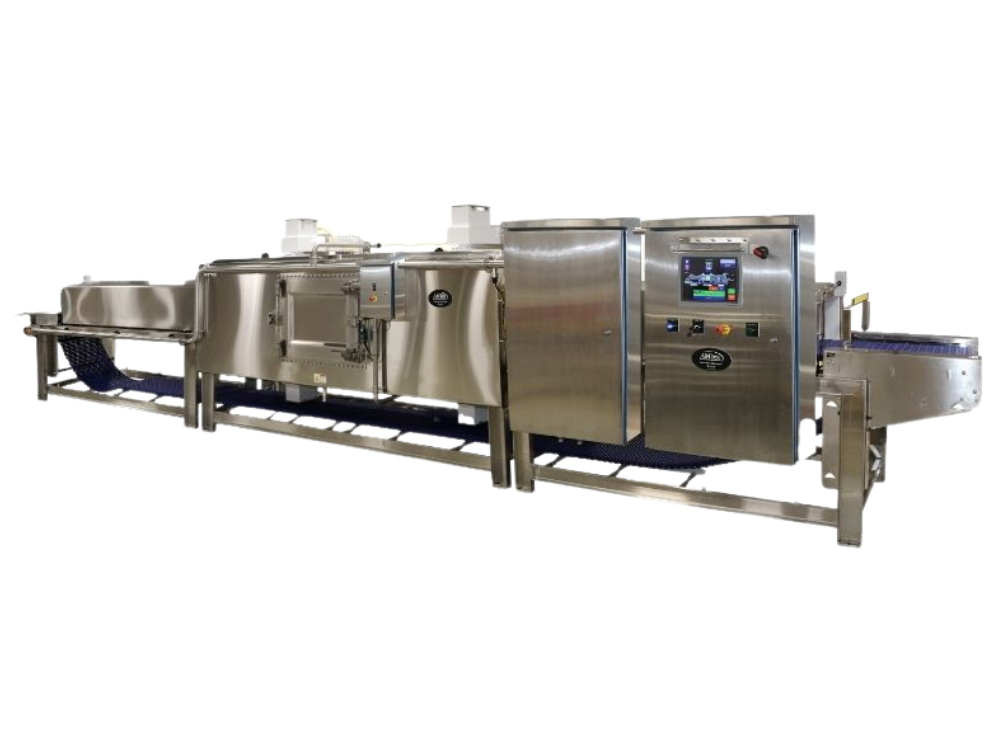
Product Spotlight: AMTek Microwaves
Industrial microwaves are ideal for tempering, cooking and drying a variety of products.


Packaging film affects far more than pack appearance. It must suit the product, form correctly on the machine, seal consistently and run reliably within the wider production line.
Omori’s flow-wrapper range should therefore be assessed alongside the proposed material, pack format and product. Film choice is not a separate purchasing decision to leave until the machine has been selected.
This guide outlines the practical questions to resolve before choosing or changing a flow wrap packaging material.
Flow wrap packaging material is the flexible film formed around a product and sealed by a flow wrapping machine. The required material depends on the product, finished pack, sealing process and production environment.
Horizontal flow wrapping is used across applications such as bakery, confectionery, snacks, meat and poultry, cheese, fresh produce and pharmaceutical products. These categories provide context, but they do not determine the film specification on their own. Product condition, handling, storage and pack requirements still need to be reviewed.
Film behaviour influences tracking, forming, sealing, pack appearance and practical line performance. A material that appears suitable on paper may behave differently once product variation, residue, speed, temperature and changeovers are introduced.
Omori can review the material in the context of the product and the intended flow wrap machine. This helps identify where trials or technical confirmation are required before a final specification is agreed.
Record the product’s dimensions, shape, weight, surface, fragility, temperature and expected variation. Moisture, grease, dust, crumbs or product movement can affect film handling and the sealing area.
The practical question is whether the material can protect and present the actual product while remaining suitable for repeatable production.
Define the finished pack before comparing films. Confirm pack dimensions, product orientation, seal position, print or registration needs, coding space and any retail or downstream handling requirements.
Clarity, print quality and pack feel may matter commercially, but they must be considered alongside sealing and line performance.
Clarify what the pack must protect against during storage, distribution and use. Depending on the application, this may include moisture, oxygen, contamination, odour transfer or physical handling.
Barrier and shelf-life claims should come from approved technical evidence. They should not be inferred from a generic material description.
The material must support the required seal under real production conditions. Seal position, consistency and appearance can be affected by film behaviour and by product entering the sealing area.
Where pack integrity is important, Omori and the relevant material supplier should confirm the test approach before the film is approved.
Compatibility is not only about whether the film can run. It also includes tracking, tension, forming, sealing, changeovers and the ability of the complete line to operate consistently at the required output.
A new film or pack format should not be assumed to perform like the current material. Trials may be needed, particularly where output is high or the product varies.
Environmental objectives can be part of the brief, but the replacement material must still meet the product, pack and production requirements.
Claims about recyclability, material reduction, waste, carbon impact or product shelf life require approved evidence. The safer decision process is to define the objective, test the proposed material and confirm what can be stated.
A change deserves closer review when it alters film thickness, stiffness, seal behaviour, barrier performance, print requirements or the way the material runs through the machine. The same applies when the product is fragile, moist, greasy, dusty, temperature-sensitive or difficult to feed consistently.
Where the change is being introduced to support an environmental target, product protection and production reliability should remain part of the same decision. A material change that causes pack failures, stoppages or avoidable product loss may not deliver the intended outcome.
Bring the product, current and proposed film details, required pack format, seal expectations, target output and information about the existing line. Include any known issues with feeding, sealing, coding, inspection, changeovers or cleaning.
This allows Omori to assess the material as part of the complete application rather than in isolation. For broader machinery-selection guidance, see the Flow Wrapping Machine Buying Guide.
| Evaluation area | Questions to ask | Review note |
|---|---|---|
| Product | What are the product dimensions, shape, weight, surface and handling risks? | Material choice should reflect the real product, not only the desired pack format. |
| Pack performance | What must the pack protect, display or support during handling and distribution? | Barrier, presentation and handling requirements should be defined early. |
| Sealing | What seal strength, appearance and consistency are required? | Residue, moisture, dust or product contamination in the seal area may affect performance. |
| Machine fit | Has the material been tested with the intended flow wrap machine and pack size? | Compatibility should be validated before firm claims or commitments are made. |
| Line reliability | Can the material run consistently at the required output and changeover pattern? | Practical production performance matters more than theoretical suitability. |
| Sustainability | Are environmental goals supported without compromising pack integrity or line reliability? | Claims need evidence and SME approval before publication. |
Where a material supplier is involved, responsibilities should be clear. Omori can assess the machinery and application requirements, while the material supplier should substantiate material composition, barrier, recyclability and other product-specific claims.
During a trial, buyers should agree what will be observed: film tracking and forming, seal consistency, pack appearance, product movement, stoppages, waste and operator intervention. The results should be recorded against agreed acceptance criteria rather than judged only from a short successful run.
A controlled evaluation usually starts by defining what the pack must achieve, then documenting the current line and any known production issues. The proposed material can then be reviewed against the product and machine before a trial is planned.
The strongest film decision links product needs, pack requirements and machine behaviour. Omori can help establish what information and trials are needed before a material or machine configuration is confirmed.
For requirements that extend beyond a single wrapper, Omori’s wider packaging machinery capability provides a route to consider feeding, inspection and downstream equipment as part of the same production-line discussion.
No. Film behaviour, sealing requirements, pack size, product condition and machine setup can all affect compatibility. Testing may be required.
It can. Changes in material structure or behaviour may affect the seal and the consistency of production. The proposed film should be assessed for the application.
Potentially, but claims depend on the material, product, collection infrastructure and evidence available. Omori should confirm approved wording before publication.
Provide product samples and dimensions, pack format, current or proposed film, seal requirements, target output, line layout and any coding, inspection, cleaning or environmental objectives.
A final decision should record the selected material, the product and pack tested, the machine conditions used and any limitations identified. Keeping that evidence with the project specification supports future changeovers, supplier discussions and controlled material changes.
Film selection should begin with the product and the required pack, then be validated against the machine and production line. Speak to Omori before committing to a new material or pack format so the application, test requirements and wider line implications can be assessed.
Explore Omori’s flow-wrapper range or contact the team to discuss the requirement.
Interested in our packaging solutions, have a question for our team or want to arrange an equipment trial?
Our team is always happy to answer any questions you may have and provide you with the information you need to make the right decision for your business.
Contact us today and one of our experts will get back to you.

Industrial microwaves are ideal for tempering, cooking and drying a variety of products.